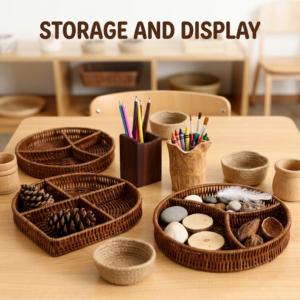
Furniture
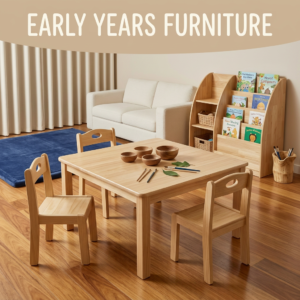
Thoughtful classroom furniture and environmental design act as a quiet catalyst for child autonomy, focus, and agency. The physical environment when decorated with natural wood finishes, muted color palettes, and clutter-free arrangements prevent sensory overload while allowing children’s authentic work and voice—rather than manufactured decorations—to decorate the space. Child-height furniture and accessible, organised shelving and resources are foundational to fostering independence, allowing young learners to freely select, work with, and tidy away resources without adult intervention. Grounded in modern educational ergonomics, providing varied physical postures—such as low floor tables, standing stations, and traditional seating—supports natural movement and self-regulation. Furthermore, flexible, modular arrangements facilitate fluid groupings, enabling children to seamlessly transition between quiet independent focus and collaborative group learning.
Showing 1–9 of 10 results
-
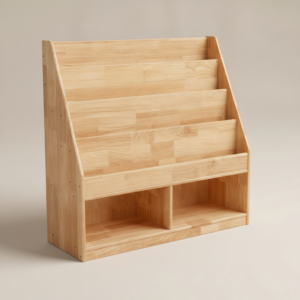
Cubby Bookshelf
$400.00 -
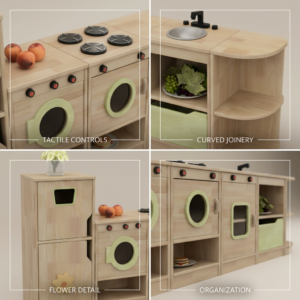
Kitchen Furniture Set – 6 Piece
$3,500.00 -

Nottingham Chair
$250.00 -
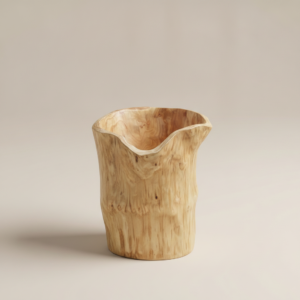
Root Carved Bucket
Price range: $200.00 through $250.00 -

Rubberwood Table
Price range: $300.00 through $400.00 -

Sherwood Chair
$250.00 -
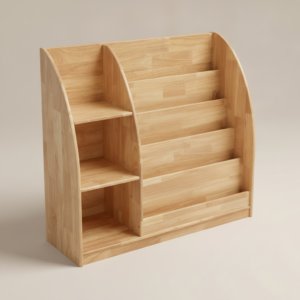
Side Shelf Bookshelf
$450.00 -
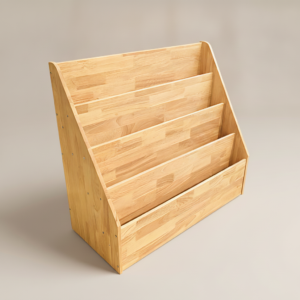
Single Sided Bookshelf
$300.00 -

Smiley Chairs (Set of Two Chairs)
$350.00