Loose Parts
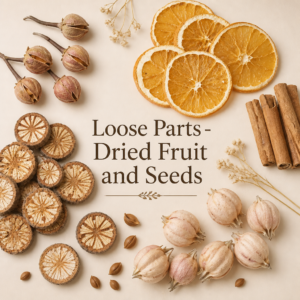
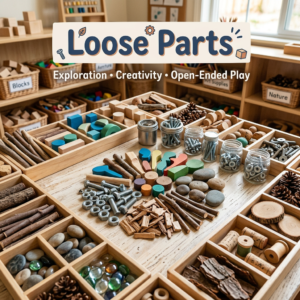
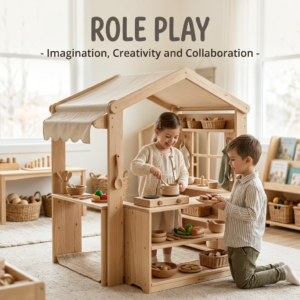
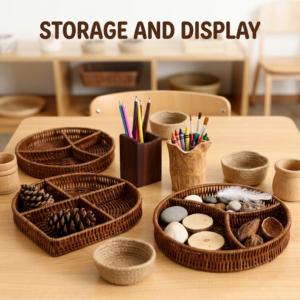
Sensory and loose parts significantly enrich early childhood development by inviting children to explore open-ended materials that stimulate tactile, visual and cognitive processing. Grounded in Simon Nicholson’s Theory of Loose Parts (1971), this approach emphasises that an environment rich in movable, variable objects directly increases a child’s capacity for innovation, critical thinking, and creative problem-solving. In Montessori education, sensory play is carefully scaffolded through specialised “sensorial materials”—such as tactile tablets and sound cylinders—designed to help children refine their senses, organise spatial information, and build self-regulation through targeted self-correction. The Reggio Emilia approach also heavily integrates loose parts—often collected through initiatives like Italy’s Remida centers—to encourage deep symbolic representation and collaboration, viewing natural and reclaimed items as dynamic visual media through which children communicate their thinking. Neuroscience and early childhood research also confirm that multi-sensory experiences foster neural pathway development, strengthening language acquisition, emotional regulation and fine-motor control through hands-on discovery.
Showing the single result