Role Play
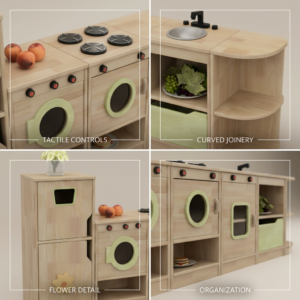
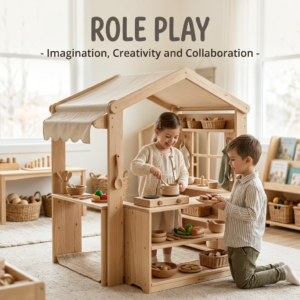
Roleplay and dramatic play provide a foundational vehicle for socio-emotional growth, imaginative storytelling, and communicative development in early childhood. In the Reggio Emilia approach, dramatic play is viewed as a primary expressive vehicle—one of the “hundred languages”—where children construct identities, project internal theories about the adult world, and negotiate complex social hierarchies alongside peers. In Montessori education, this exploration is nurtured through realistic “Practical Life” activities and purposeful pretend play, where child-sized, real-world implements allow children to practice functional skills, master sequence-driven tasks, and refine self-regulation within structured environments. Grounded in Lev Vygotsky’s socio-cultural theory, extensive developmental research emphasises that sociodramatic play creates a crucial “zone of proximal development,” allowing young children to practice symbolic representation, perspective-taking, advanced vocabulary acquisition, and emotional self-soothing through collaborative storytelling.
Showing all 2 results